Industrial Fig Enzyme Meat Tenderization: Using Ficin in Formulations
Formulate with ficin for industrial meat tenderization: pH, temperature, dosage, QC, COA/TDS/SDS, pilot validation, and supplier checks.
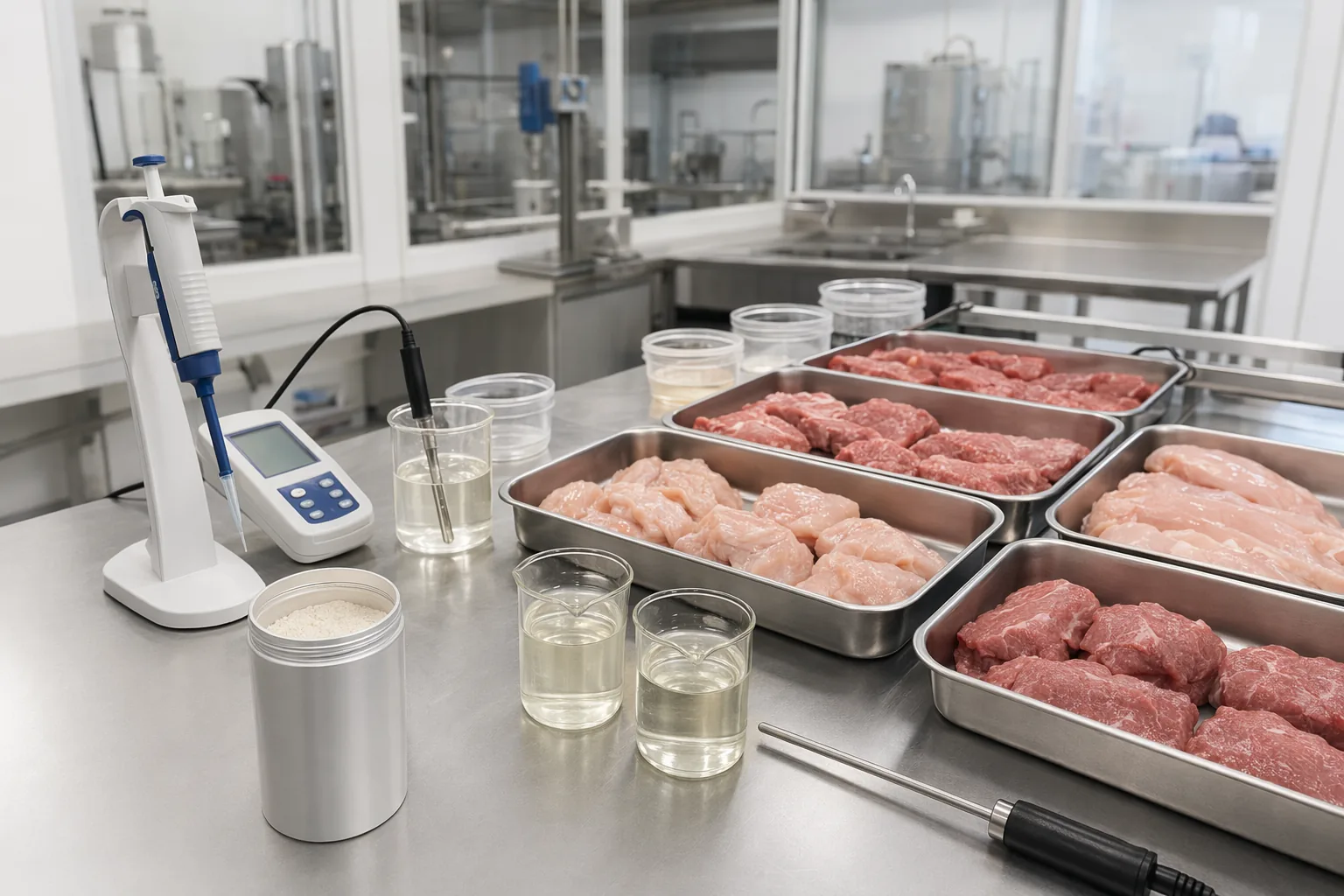
Ficin, the protease commonly known as fig enzyme, helps processors control meat texture through targeted protein hydrolysis. This guide outlines practical formulation ranges, process controls, QC checks, and supplier documentation for B2B buyers evaluating ficin enzyme for meat tenderization.
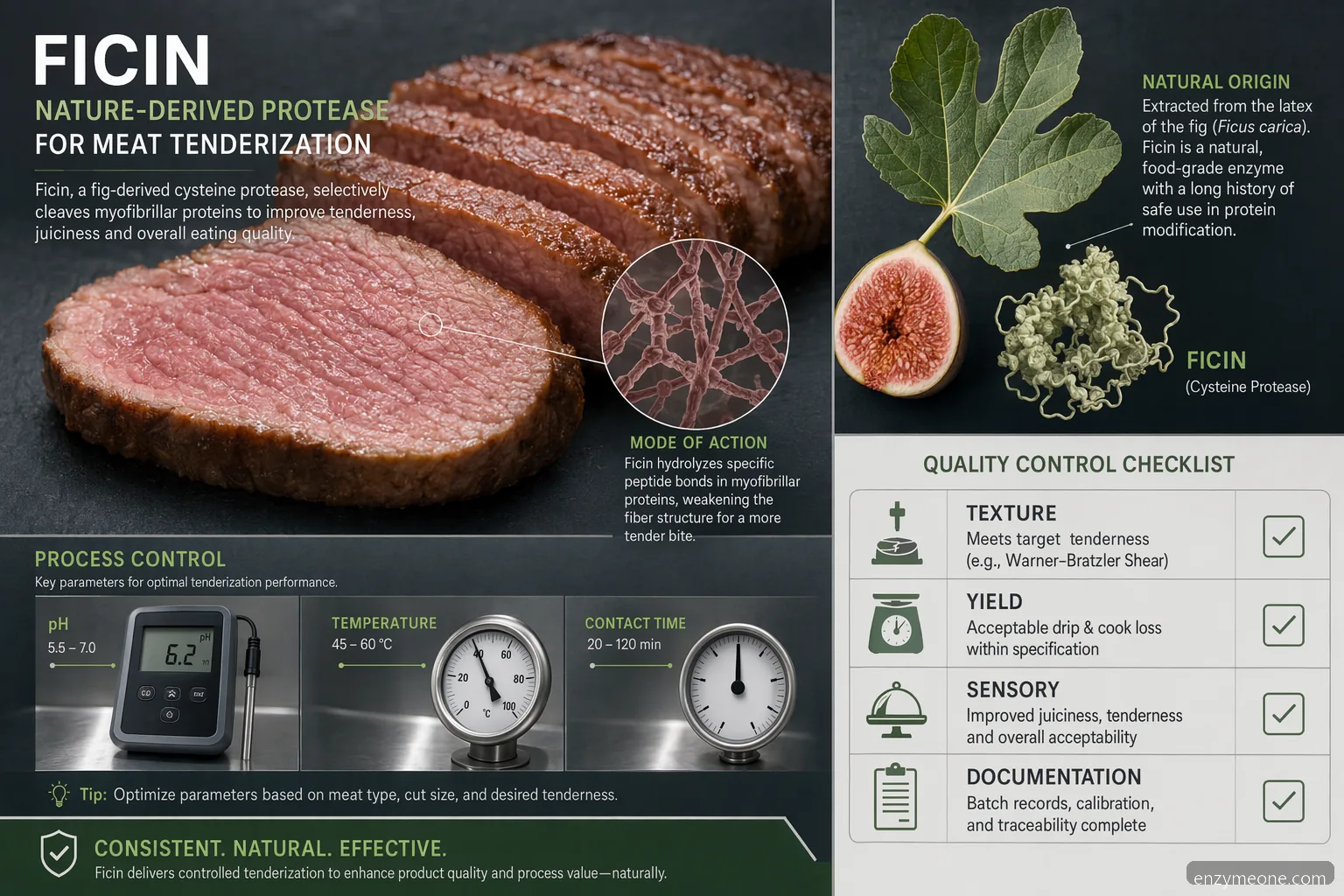
What Ficin Does in Meat Tenderization
Ficin is a plant-derived cysteine protease naturally associated with fig latex, which is why buyers often search for fig enzyme for meat tenderization or ficin meat tenderizer. In meat systems, ficin hydrolyzes structural and myofibrillar proteins, helping reduce toughness and improve bite when applied under controlled conditions. For industrial ficin enzyme meat tenderization, the objective is not maximum hydrolysis; it is repeatable, specification-driven texture improvement without mushiness, purge increase, or flavor defects. Ficin can be applied in marinades, brines, injection systems, tumbling, formed products, and certain pre-cook processes, depending on the meat type and final product standard. Because enzyme strength, carrier composition, and activity assay can vary between suppliers, formulation work should compare activity-normalized dosage rather than simple weight percentage. A qualified fig enzyme supplier for meat tenderization should provide application support, clear documentation, and lot-to-lot controls.
Best suited for controlled texture modification, not uncontrolled softening. • Activity units and assay conditions must be reviewed before dosage comparison. • Process fit depends on contact time, temperature, pH, salt, and heat step.
Starting Formulation Ranges for Pilot Trials
For industrial fig enzyme meat tenderization, start with a conservative bench design and scale only after texture and yield are verified. A practical screening range for many commercial ficin preparations is 50 to 500 ppm as supplied, or about 0.005% to 0.05% in the finished meat system, adjusted for declared activity. Some low-activity blends may require higher use levels, while concentrated ficin enzyme products may require much less. Run a dose-response trial with at least three levels, a no-enzyme control, and a defined contact time. Many meat applications operate near pH 5.5 to 7.0, where ficin can remain effective, while warmer conditions can accelerate hydrolysis. Use chilled processing when possible to manage reaction rate, then validate the cooking or blanching step needed to stop further tenderization. Record brine pickup, tumble time, product temperature, and post-cook texture.
Initial dosage screen: 50 to 500 ppm as supplied, activity-adjusted. • Common working pH: about 5.5 to 7.0 for many meat systems. • Use a no-enzyme control and multiple dosage points.
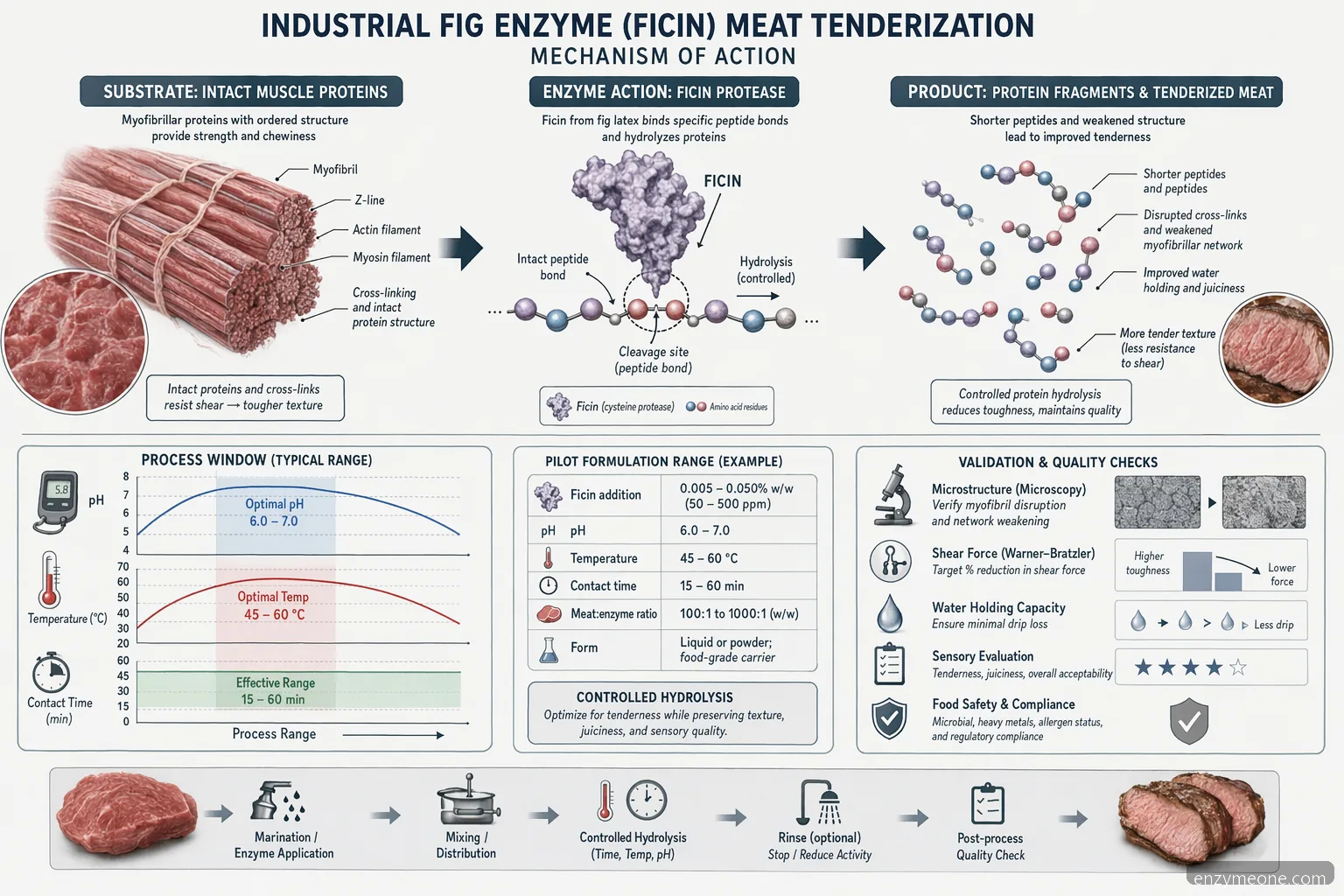
Process Conditions: pH, Temperature, and Contact Time
Ficin enzyme for meat tenderization performs differently depending on formulation chemistry and thermal history. In general, protease activity increases as temperature rises until the enzyme begins to lose stability, so warm holding can quickly overtenderize a product. For controlled meat processing, many formulators keep injected or tumbled meat cold, commonly 0 to 8°C, and use time, concentration, and distribution as the main levers. If an accelerated step is required, pilot trials may evaluate short exposure at moderate temperatures, such as 20 to 45°C, with strict monitoring. The final heating step should be validated for enzyme inactivation under the specific product geometry and process; processors often verify that core temperature, hold time, and texture stability are sufficient. Salt, phosphates, organic acids, marinades, reducing agents, and pH adjustment can all influence performance. Always confirm with the supplier’s TDS and your own plant trial data.
Cold processing helps slow hydrolysis and improve control. • Moderate heat accelerates tenderization but increases overtenderization risk. • Thermal inactivation must be validated in the actual product and process.
Quality Control Checks for Tenderized Products
Quality control should connect enzyme use to measurable product attributes. For industrial ficin meat tenderization, common checks include raw material temperature, brine pH, enzyme addition accuracy, injection or marinade pickup, tumble time, and pre-cook hold duration. Finished-product testing may include shear force, texture profile analysis, slice integrity, cook yield, purge, sensory bite, and visual appearance. Because ficin is a protein hydrolysis tool, too much activity may reduce cohesion, increase soft spots, or create variability between muscle groups. A practical QC plan should define acceptable ranges for tenderness and yield before the pilot begins. For lot control, compare each incoming ficin enzyme COA with the purchase specification, including activity, appearance, moisture if reported, microbiological limits where applicable, and recommended storage. Retain samples from enzyme lots and finished batches during validation so deviations can be investigated with data.
Track enzyme weight, activity, lot number, and addition point. • Measure texture by shear force or another repeatable internal method. • Monitor purge and cook yield alongside tenderness.
Documentation Buyers Should Request
A B2B buyer evaluating a ficin enzyme supplier for meat tenderization should request the technical data sheet, certificate of analysis, and safety data sheet before plant trials. The TDS should state recommended use areas, handling guidance, storage conditions, activity declaration, carrier information if relevant, and process limitations. The COA should match the delivered lot and include the tested parameters used to release the product. The SDS supports safe handling, dust control, personal protective equipment decisions, and warehouse procedures. Buyers may also request allergen statements, country of origin, traceability information, non-GMO or halal/kosher documentation if required by the finished product program, and regulatory suitability statements for the intended market. Avoid assuming two ficin products are interchangeable. Differences in activity assay, formulation, granulation, solubility, and stability can alter cost-in-use and product performance.
Request COA, TDS, and SDS for every commercial evaluation. • Confirm the activity assay and units before comparing suppliers. • Ask for documentation aligned with your market and customer requirements.
Pilot Validation and Cost-in-Use
Cost-in-use for industrial fig enzyme protein hydrolysis and meat tenderization should be calculated from performance, not enzyme price alone. A more active or better-dispersing ficin product may cost more per kilogram but use less per batch, shorten processing time, reduce rejects, or improve consistency. Pilot validation should compare dosage, contact time, yield, texture, purge, labor impact, and line compatibility. Run trials at bench scale first, then confirm in plant equipment because injection pattern, mixer shear, tumble loading, and temperature control affect enzyme distribution. Establish a hold-time window so product does not continue softening during delays. If the same supplier is also considered for industrial fig enzyme pharmaceutical or other protein hydrolysis applications, keep specifications separate because food processing, pharmaceutical, and non-food uses may require different documentation and controls. Supplier qualification should include technical responsiveness, lot consistency, lead time, packaging integrity, and change-notification expectations.
Compare suppliers on activity-normalized cost per treated kilogram. • Validate in actual plant equipment before commercial launch. • Set maximum hold time and release criteria for production control.
Technical Buying Checklist
Buyer Questions
In meat tenderization discussions, fig enzyme usually refers to ficin, a protease associated with fig latex. Commercial products may differ in activity level, carrier, purity, granulation, and solubility, so the names should not be treated as a complete specification. Buyers should confirm the enzyme type, declared activity, assay method, recommended use range, and food-processing suitability before running trials.
A common starting screen is about 50 to 500 ppm as supplied, or 0.005% to 0.05% in the meat system, but the correct level depends on activity units, meat cut, pH, temperature, contact time, and final texture target. Always run a dose-response trial with a no-enzyme control and confirm the result in plant equipment before commercial use.
Yes. Ficin continues hydrolyzing proteins while conditions support activity, so excessive dosage, warm holding, uneven distribution, or delayed cooking can cause soft texture, poor sliceability, or purge issues. Control requires accurate weighing, uniform dispersion, defined hold time, temperature monitoring, and validated heat inactivation. Finished-product texture and yield should be part of the release criteria during validation.
Compare activity-normalized cost, lot consistency, technical support, lead time, packaging, solubility, storage stability, and documentation quality. Request a COA, TDS, SDS, activity method, traceability information, and statements needed for the intended market. The lowest price per kilogram may not give the lowest cost-in-use if activity is lower or process variability is higher.
Ficin for Research & Industry
Need Ficin for your lab or production process?
ISO 9001 certified · Food-grade & research-grade · Ships to 80+ countries
Frequently Asked Questions
What is the difference between fig enzyme and ficin?
In meat tenderization discussions, fig enzyme usually refers to ficin, a protease associated with fig latex. Commercial products may differ in activity level, carrier, purity, granulation, and solubility, so the names should not be treated as a complete specification. Buyers should confirm the enzyme type, declared activity, assay method, recommended use range, and food-processing suitability before running trials.
How much ficin enzyme should be used for meat tenderization?
A common starting screen is about 50 to 500 ppm as supplied, or 0.005% to 0.05% in the meat system, but the correct level depends on activity units, meat cut, pH, temperature, contact time, and final texture target. Always run a dose-response trial with a no-enzyme control and confirm the result in plant equipment before commercial use.
Can ficin overtenderize meat products?
Yes. Ficin continues hydrolyzing proteins while conditions support activity, so excessive dosage, warm holding, uneven distribution, or delayed cooking can cause soft texture, poor sliceability, or purge issues. Control requires accurate weighing, uniform dispersion, defined hold time, temperature monitoring, and validated heat inactivation. Finished-product texture and yield should be part of the release criteria during validation.
What should buyers compare when selecting a ficin supplier?
Compare activity-normalized cost, lot consistency, technical support, lead time, packaging, solubility, storage stability, and documentation quality. Request a COA, TDS, SDS, activity method, traceability information, and statements needed for the intended market. The lowest price per kilogram may not give the lowest cost-in-use if activity is lower or process variability is higher.
Related: Ficin Enzyme Uses for Industrial Proteolysis
Turn This Guide Into a Supplier Brief Request ficin specifications, samples, and application support for your next meat tenderization pilot. See our application page for Ficin Enzyme Uses for Industrial Proteolysis at /applications/ficin-enzyme-uses/ for specs, MOQ, and a free 50 g sample.
Contact Us to Contribute