Fig Enzyme for Meat Tenderization: Industrial Process Guide
Process guidance for industrial ficin use in meat tenderization: pH, temperature, dosage, QC, pilot trials, COA/TDS/SDS, and supplier checks.
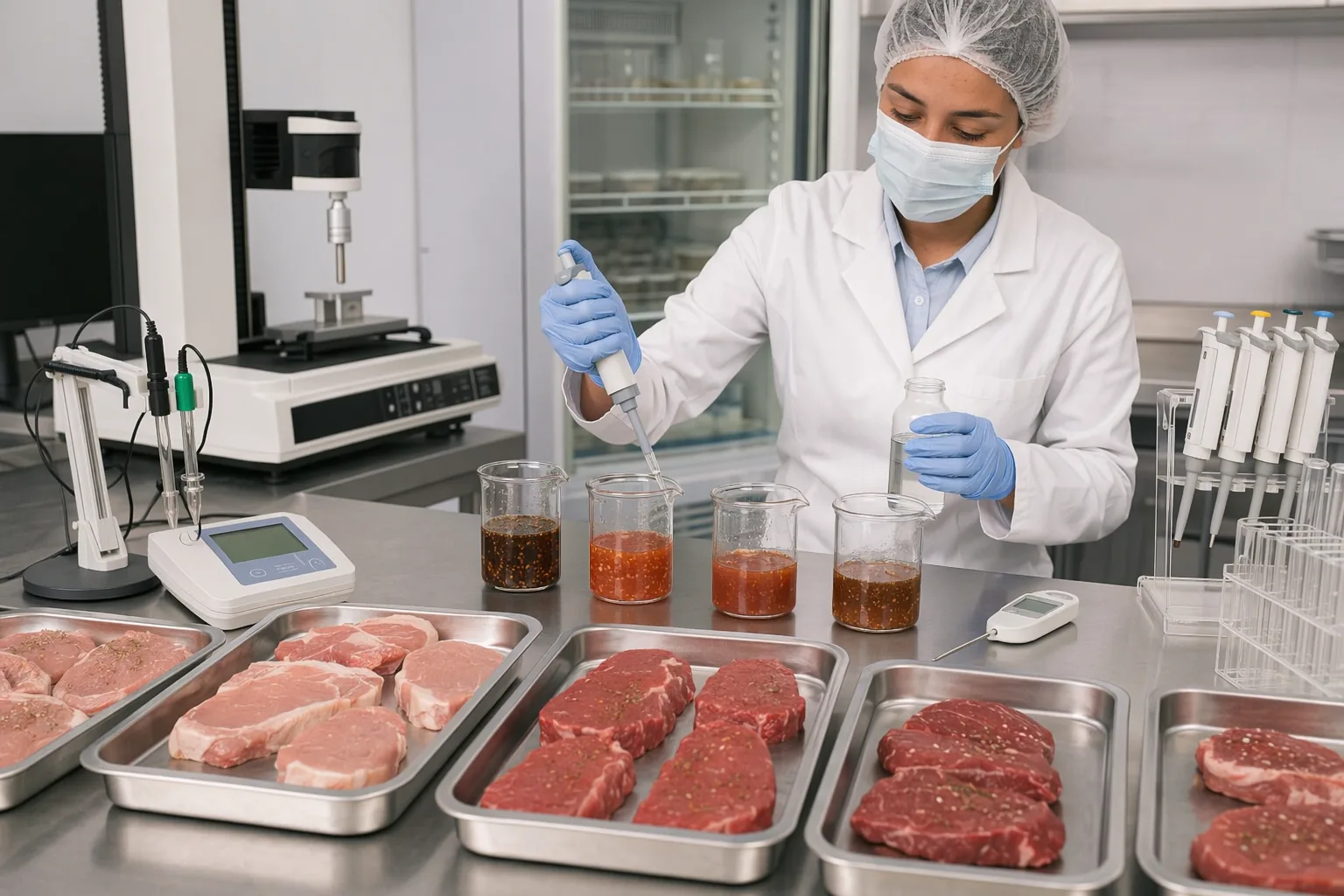
Ficin, the proteolytic fig enzyme, can help processors improve tenderness and protein functionality when dosage, contact time, temperature, and inactivation are validated at plant scale.
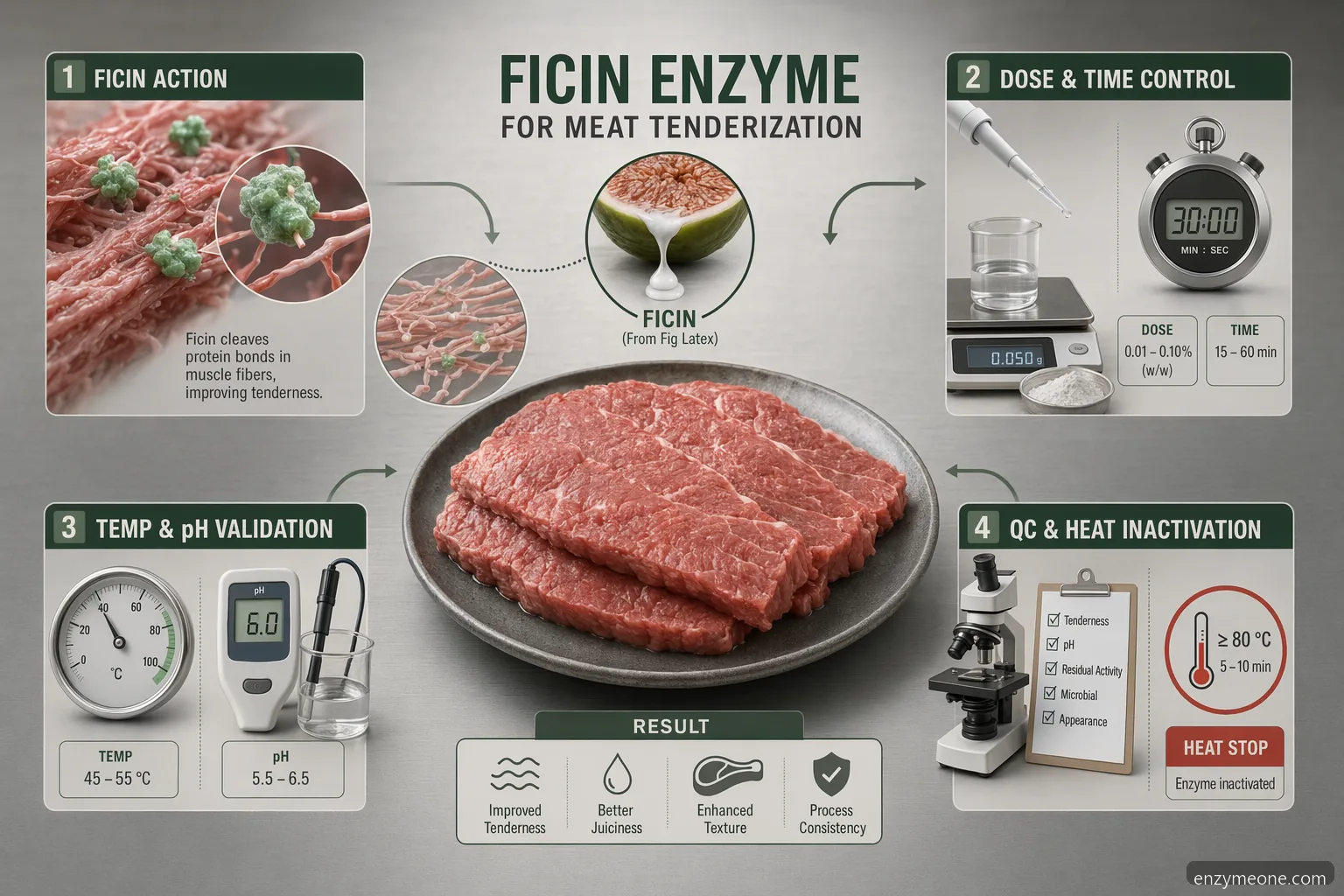
What Ficin Does in Meat Tenderization
Ficin is a cysteine protease naturally associated with fig latex, which is why it is often called a fig enzyme. In industrial ficin meat tenderization, the enzyme cleaves selected protein structures in meat, helping reduce toughness when applied under controlled conditions. It can be used in marinades, injection brines, tumbling systems, surface applications, and formulated tenderizing blends. Because ficin is a protease, performance depends on substrate type, enzyme activity, salt level, pH, temperature, contact time, and how evenly the enzyme is distributed. Over-processing can create a mushy texture or excess purge, so the goal is not maximum hydrolysis; the goal is repeatable tenderness with acceptable yield, bite, appearance, and flavor. For B2B buyers, ficin for meat tenderization should be evaluated as a functional processing aid or ingredient within a defined formulation and label strategy, not as a generic commodity powder.
Common use cases include beef, pork, poultry, and restructured meat systems. • Ficin may be selected where a plant wants a plant-derived protease option. • Performance must be validated against the target cut, process, and finished-product specification.
Recommended Process Conditions for Pilot Trials
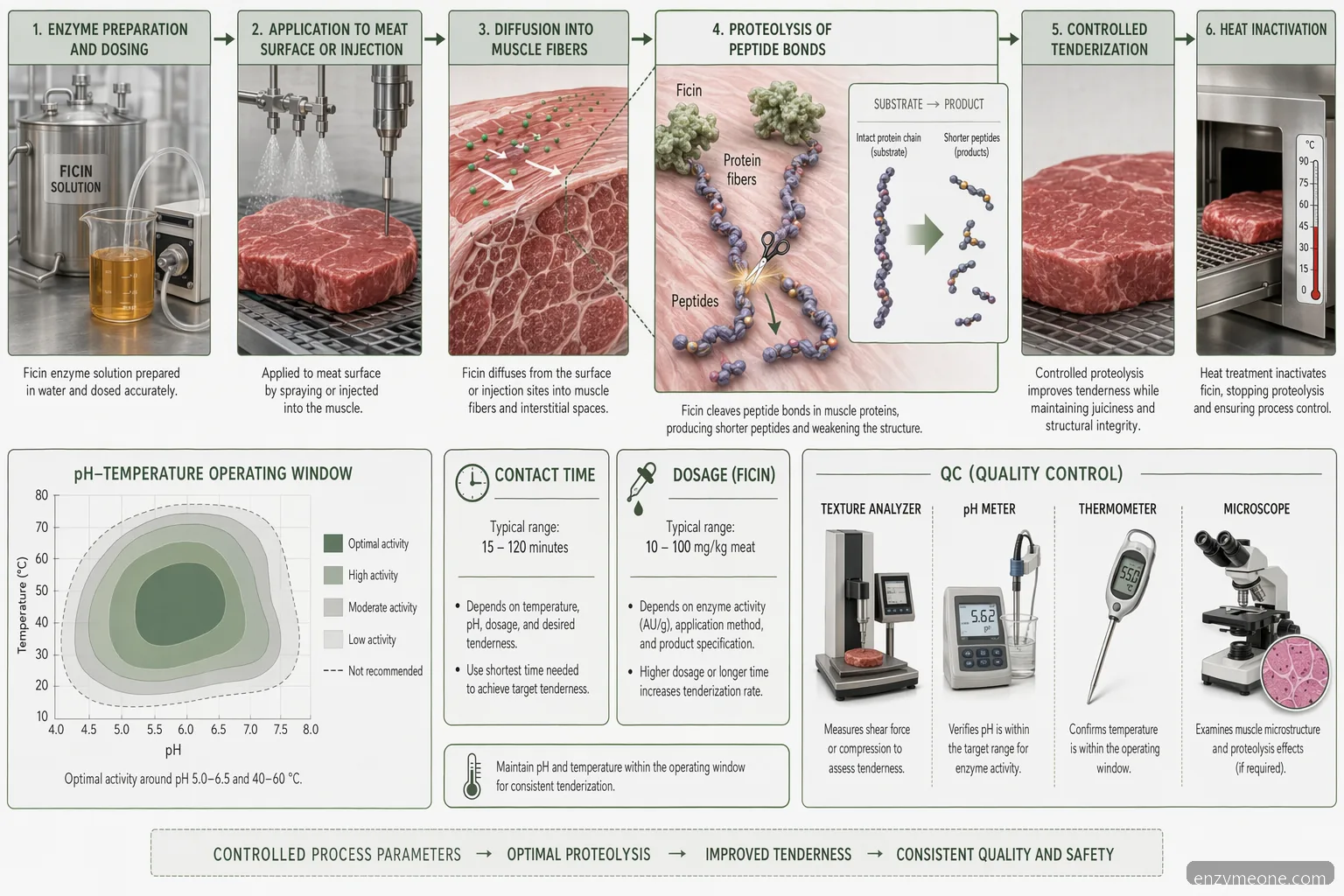
For pilot validation, many processors begin with a dosage screening rather than a single fixed addition rate. A practical starting band is often 0.02% to 0.20% enzyme preparation by meat weight, adjusted for declared activity on the COA and the formulation’s delivery method. Ficin generally performs in mildly acidic to neutral conditions, so pH 5.5 to 7.5 is a useful trial window for meat systems. Contact may occur under refrigerated conditions for longer hold times or at warmer process temperatures where food safety controls allow. A screening range of 4 to 10 °C for extended marination and 25 to 55 °C for short, controlled reactions can help establish sensitivity. Enzyme inactivation should be confirmed during cooking or blanching, commonly by reaching sufficient internal heat exposure, often above 75 to 85 °C depending on time, matrix, and process design.
Run low, medium, and high dosage trials against an untreated control. • Hold salt, phosphate, pH, and tumble time constant during screening. • Confirm thermal inactivation in the real product, not only in buffer.
Formulation and Application Options
A fig enzyme for meat tenderization can be incorporated through dry seasoning, marinade, brine injection, vacuum tumbling, or pre-dissolved enzyme solution. Injection and tumbling usually provide more uniform enzyme distribution than surface dusting, especially for whole-muscle cuts. Dry blends can be convenient, but uniform dispersion, humidity control, and sequencing with salt or acidulants must be managed. If the enzyme is hydrated before use, processors should control water temperature, mixing time, and hold time to avoid activity loss before application. In comminuted or restructured meats, ficin can alter bind and texture if the reaction is too strong, so bench testing should include slicing, bite, purge, and cook yield. For industrial fig enzyme meat tenderization, success usually comes from balancing tenderization with product integrity, not from using the highest activity or fastest reaction possible.
Use calibrated scales and validated mixing procedures for small enzyme additions. • Avoid hot make-up water unless stability has been confirmed. • Check compatibility with salt, phosphates, acids, sugars, and flavor systems. • Document application uniformity across batch size and equipment type.
Quality Control Checks That Matter
QC should begin with incoming raw material review. Each lot of ficin enzyme should arrive with a COA showing enzyme activity method, appearance, moisture or loss on drying where applicable, microbiological limits, and any relevant food-grade parameters. The TDS should describe activity units, carrier system, solubility, recommended storage, and handling guidance, while the SDS should support safe plant handling. In-process QC may include marinade pH, brine temperature, injection pickup, tumble time, batch temperature, and hold duration. Finished-product evaluation should include objective tenderness testing where available, sensory bite panels, slice integrity, purge, cook yield, color, and off-texture monitoring. For industrial ficin enzyme meat tenderization, lot-to-lot enzyme activity variation is a practical purchasing concern; dosage should be based on activity and validated performance, not only on kilograms added per batch.
Retain samples from pilot and first commercial batches. • Trend tenderness and yield data by enzyme lot. • Set rejection limits for over-tenderized or high-purge product. • Verify storage conditions before releasing enzyme to production.
Supplier Qualification and Cost-in-Use
Selecting a ficin enzyme supplier for meat tenderization should involve technical and commercial qualification. Buyers should request COA, TDS, SDS, country-of-origin information, ingredient composition, carrier details, allergen statement, GMO status if relevant to the buyer’s market, recommended storage, shelf life, and activity test method. Do not compare offers only by price per kilogram. A higher-activity or more consistent product may have lower cost-in-use if it reaches the target tenderness at a lower addition rate with less rework. Pilot trials should compare enzyme lots under the same meat block, formula, temperature profile, and hold time. The strongest supplier fit is usually the one that can support scale-up, provide transparent specifications, answer application questions, and maintain reliable documentation. For a fig enzyme supplier for meat tenderization, consistency and process support are as important as headline activity.
Compare cost per treated kilogram of meat, not only enzyme price. • Confirm lead time, minimum order quantity, and batch traceability. • Ask whether activity is standardized and how it is measured. • Require samples for pilot validation before commercial approval.
Technical Buying Checklist
Buyer Questions
Yes. In meat processing, ficin is commonly referred to as a fig enzyme because it is a protease associated with fig latex. For procurement and formulation, the important details are the enzyme activity, carrier system, solubility, lot consistency, and application data. Buyers should evaluate a ficin enzyme for meat tenderization using pilot trials under their own pH, temperature, dosage, and cooking conditions.
There is no universal dosage because activity units, meat cut, brine composition, contact time, and temperature all affect results. A practical screening band is often 0.02% to 0.20% enzyme preparation by meat weight. Start with low, medium, and high trials against an untreated control. Final dosage should be based on tenderness, purge, cook yield, sensory texture, and confirmed enzyme inactivation.
Yes, ficin can be used in injection brines, marinades, and vacuum tumbling systems when it is properly dispersed and compatible with the formulation. Processors should monitor brine pH, temperature, salt level, injection pickup, and tumble time. Uniform distribution is critical because localized high enzyme concentration can cause soft spots or uneven bite. Pilot validation should match the intended commercial equipment as closely as possible.
Compare suppliers by cost-in-use, documentation, lot consistency, technical support, and pilot performance, not only by price per kilogram. Request COA, TDS, SDS, activity method, composition, traceability, allergen information, storage guidance, and shelf life. A qualified ficin supplier for meat tenderization should provide samples and enough technical detail to support repeatable scale-up without making unsupported performance claims.
Overuse can lead to excessive protein breakdown, mushy texture, high purge, poor slice integrity, reduced bite, and inconsistent sensory quality. These issues are more likely when dosage, temperature, or hold time is too high, or when the enzyme is not evenly distributed. A controlled trial plan should define upper limits, monitor finished-product texture, and verify that the cooking process adequately stops enzyme activity.
Ficin for Research & Industry
Need Ficin for your lab or production process?
ISO 9001 certified · Food-grade & research-grade · Ships to 80+ countries
Frequently Asked Questions
Is ficin the same as fig enzyme for meat tenderization?
Yes. In meat processing, ficin is commonly referred to as a fig enzyme because it is a protease associated with fig latex. For procurement and formulation, the important details are the enzyme activity, carrier system, solubility, lot consistency, and application data. Buyers should evaluate a ficin enzyme for meat tenderization using pilot trials under their own pH, temperature, dosage, and cooking conditions.
What dosage should an industrial processor use?
There is no universal dosage because activity units, meat cut, brine composition, contact time, and temperature all affect results. A practical screening band is often 0.02% to 0.20% enzyme preparation by meat weight. Start with low, medium, and high trials against an untreated control. Final dosage should be based on tenderness, purge, cook yield, sensory texture, and confirmed enzyme inactivation.
Can ficin be used in injection brines and tumbling systems?
Yes, ficin can be used in injection brines, marinades, and vacuum tumbling systems when it is properly dispersed and compatible with the formulation. Processors should monitor brine pH, temperature, salt level, injection pickup, and tumble time. Uniform distribution is critical because localized high enzyme concentration can cause soft spots or uneven bite. Pilot validation should match the intended commercial equipment as closely as possible.
How should we compare ficin suppliers?
Compare suppliers by cost-in-use, documentation, lot consistency, technical support, and pilot performance, not only by price per kilogram. Request COA, TDS, SDS, activity method, composition, traceability, allergen information, storage guidance, and shelf life. A qualified ficin supplier for meat tenderization should provide samples and enough technical detail to support repeatable scale-up without making unsupported performance claims.
What are the main risks of overusing ficin?
Overuse can lead to excessive protein breakdown, mushy texture, high purge, poor slice integrity, reduced bite, and inconsistent sensory quality. These issues are more likely when dosage, temperature, or hold time is too high, or when the enzyme is not evenly distributed. A controlled trial plan should define upper limits, monitor finished-product texture, and verify that the cooking process adequately stops enzyme activity.
Related: Ficin Enzyme Uses for Industrial Proteolysis
Turn This Guide Into a Supplier Brief Contact Enzyme One to discuss industrial ficin samples, documentation, and pilot support for meat tenderization. See our application page for Ficin Enzyme Uses for Industrial Proteolysis at /applications/ficin-enzyme-uses/ for specs, MOQ, and a free 50 g sample.
Contact Us to Contribute