Ficin Supplier for Meat Tenderization: Industrial Process Guide
Source industrial ficin for meat tenderization with practical pH, temperature, dosage, QC, COA/TDS/SDS, pilot, and supplier guidance.
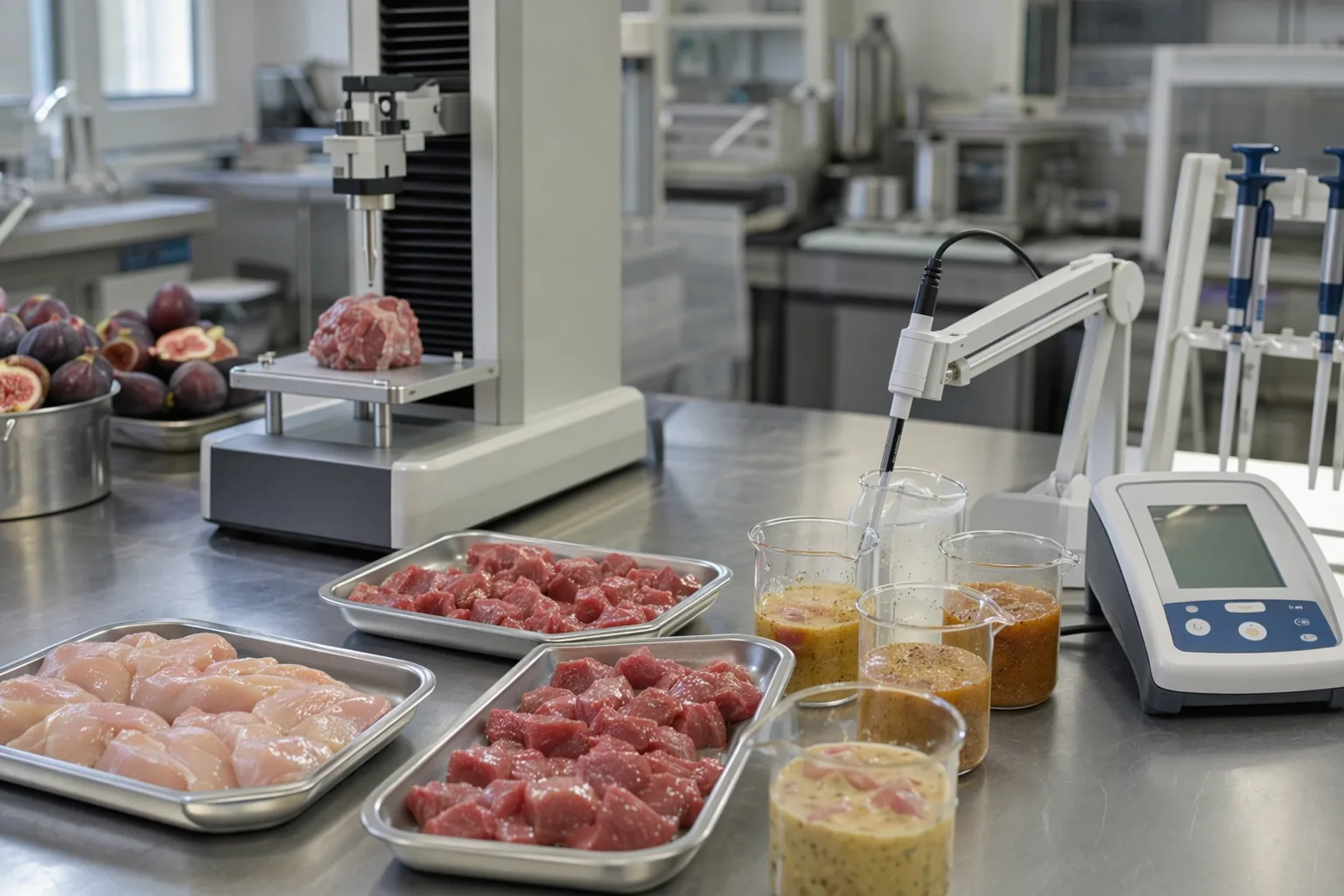
For meat processors, R&D teams, and ingredient buyers, ficin offers a plant-derived protease option for controlled tenderization, texture improvement, and protein modification when validated against your formulation and process.
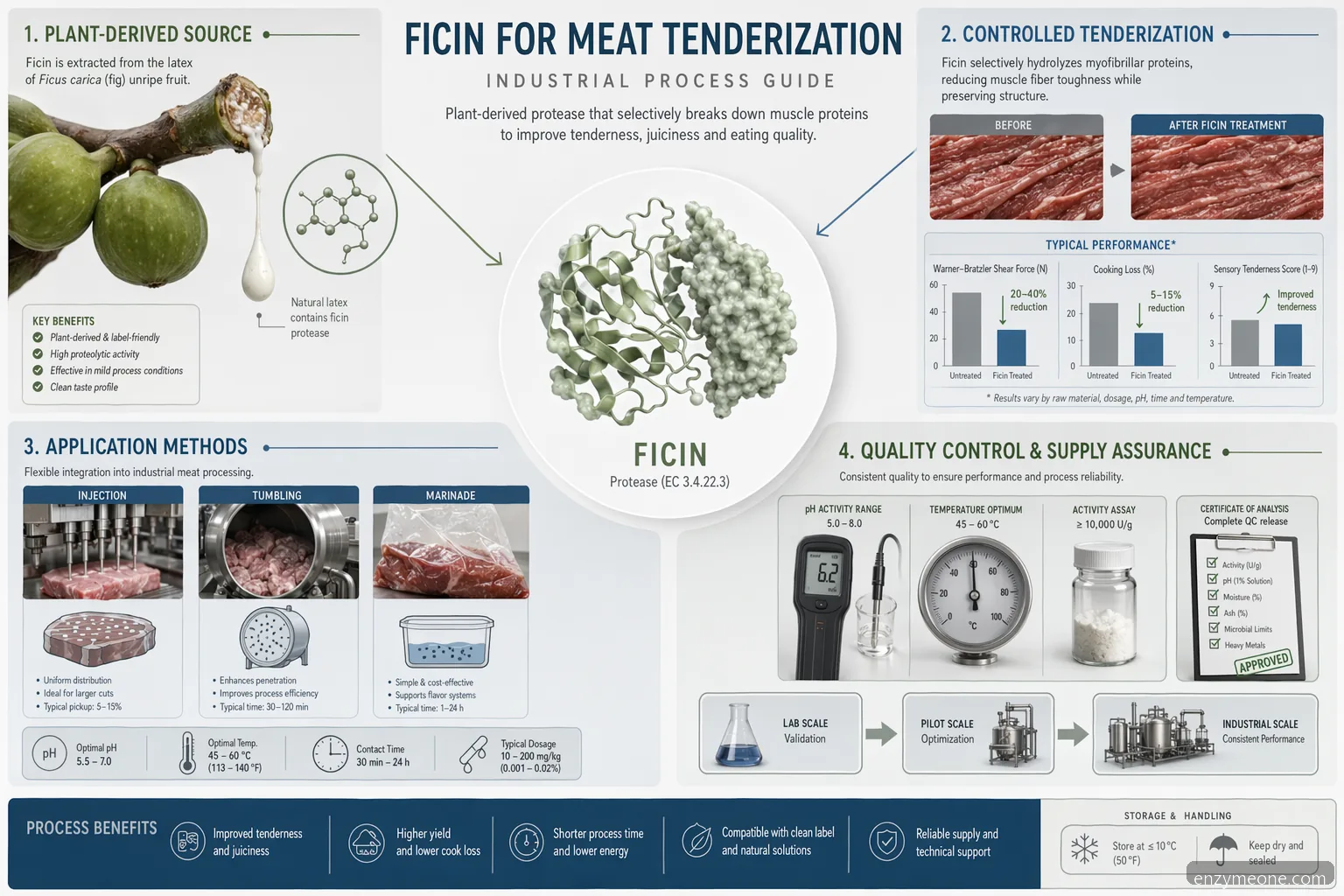
Why Meat Processors Evaluate Ficin
Ficin is a cysteine protease obtained from fig latex and used as a functional processing enzyme for protein breakdown. In meat tenderization, it can help modify muscle proteins and connective tissue when contact time, temperature, and dosage are carefully controlled. Buyers searching for a ficin supplier for meat tenderization are usually comparing enzyme activity, consistency, documentation, and support for scale-up rather than looking for a retail tenderizer. Industrial ficin meat tenderization is typically evaluated in injected, tumbled, marinated, restructured, or value-added meat products where uniform distribution matters. Because proteases can over-soften meat if uncontrolled, the best results come from measured dosing, process validation, and routine QC. A qualified ficin enzyme supplier for meat tenderization should help you interpret activity units, design bench trials, and align the enzyme format with your plant workflow.
Plant-derived protease from fig source material • Useful where controlled protein modification is required • Best suited to validated industrial meat processes • Requires defined enzyme activity and application support
Typical Process Conditions for Tenderization Trials
Ficin for meat tenderization is generally tested under mildly acidic to neutral conditions, often around pH 5.0 to 7.0, depending on meat type, marinade composition, and desired texture. Practical temperature trials commonly include refrigerated application for extended contact, such as 2 to 8°C during marination, and warmer controlled trials around 25 to 55°C when process design permits. Activity typically increases with temperature until thermal instability or product quality limits are reached. Initial dosage screening may start in the range of 0.01% to 0.20% enzyme preparation by meat weight, adjusted for declared activity, contact time, and target bite. These figures are starting points, not final specifications. Salt, phosphates, acids, reducing agents, and other marinade components can affect performance, so each formula should be tested under actual plant conditions.
Starting pH screen: about 5.0 to 7.0 • Refrigerated contact: 2 to 8°C for longer marination • Controlled warm trials: about 25 to 55°C where suitable • Initial dosage screen: 0.01% to 0.20% by meat weight
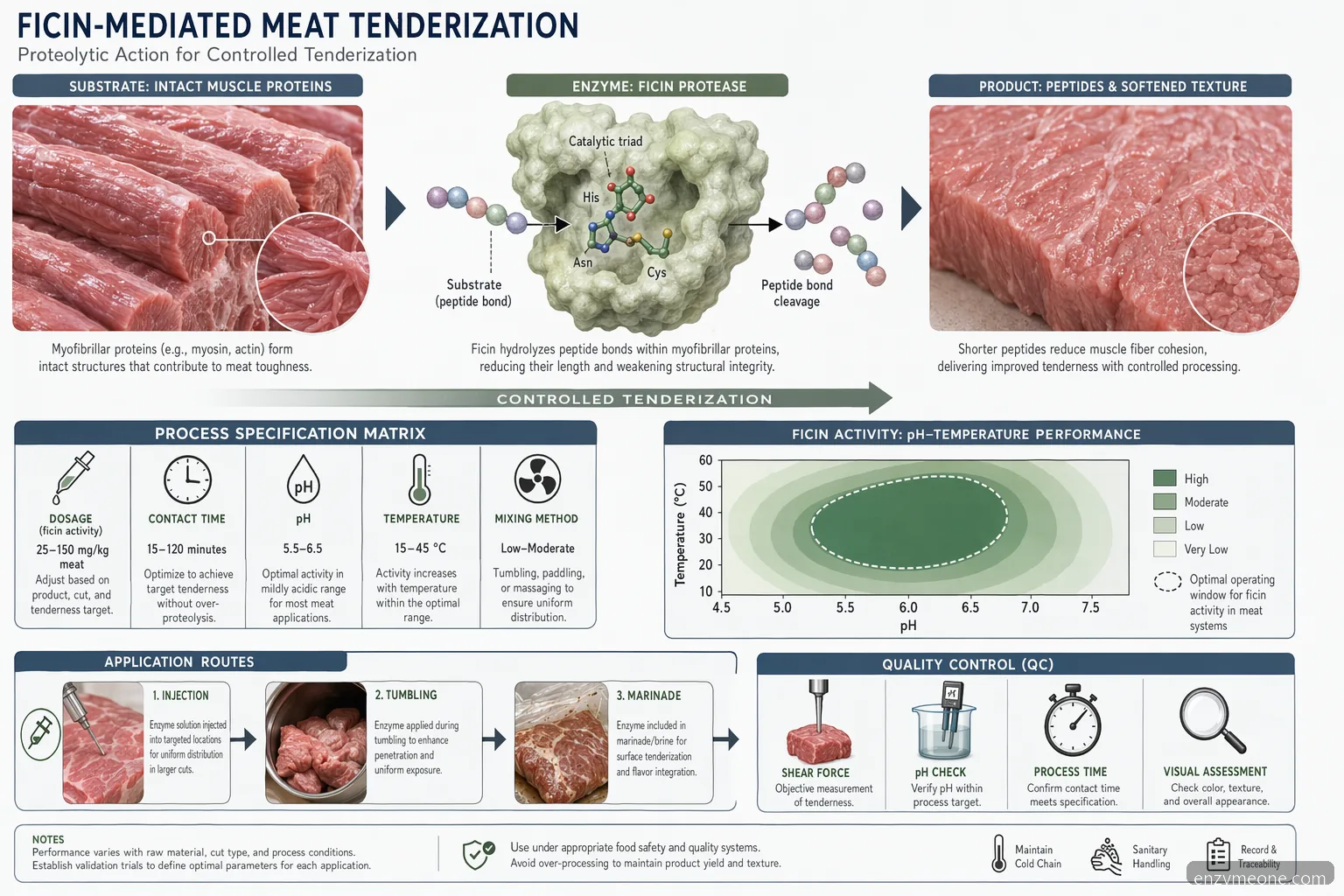
Application Methods: Injection, Tumbling, and Marinades
Industrial ficin enzyme meat tenderization depends on even distribution. For whole-muscle products, ficin can be incorporated into brines or marinades used for injection, vacuum tumbling, immersion, or combination processes. Injection improves delivery into thick cuts, while tumbling supports dispersion and protein extraction in value-added meats. For smaller pieces, diced meat, or restructured products, direct addition through a pre-dispersed enzyme solution may be more practical. The enzyme should be fully hydrated and dispersed before contact with meat to avoid localized over-tenderization. Process teams should monitor pump shear, brine temperature, hold time, and dwell time before cooking or freezing. If the product is cooked, a validated heat process may reduce residual protease activity; if sold raw, cold-chain control and dosage precision become even more important.
Use pre-dispersion to reduce enzyme hot spots • Validate injection uniformity and pickup rate • Track dwell time between application and cooking • Assess texture after storage, cooking, and reheating
Quality Control and Performance Testing
A fig enzyme supplier for meat tenderization should support measurable QC rather than relying on subjective claims. Incoming enzyme checks may include appearance, odor, moisture, microbiological limits, activity assay, lot number, shelf life, and storage conditions. In-process controls should measure marinade pH, brine strength, temperature, pickup percentage, tumbling time, and hold time. Finished product evaluation can include shear force, sensory bite, purge loss, cook yield, sliceability, and texture after refrigerated or frozen storage. Side-by-side controls are important because raw material variability, animal age, cut type, and connective tissue level can influence results. For procurement teams, the most useful data compares cost-in-use against target tenderness and yield, not just price per kilogram of enzyme powder or liquid concentrate.
Run untreated and treated controls in every pilot • Measure shear force or a defined texture endpoint • Track purge, cook yield, and sensory acceptance • Compare cost-in-use at the validated dosage
Documentation to Request From a Ficin Supplier
When qualifying an industrial fig enzyme meat tenderization source, request current technical and safety documentation before plant trials. The certificate of analysis should identify the batch, activity method, specification limits, manufacturing date or retest date, and relevant microbiological or chemical parameters. A technical data sheet should describe enzyme type, declared activity, physical form, recommended storage, handling guidance, solubility or dispersion notes, and general application conditions. The safety data sheet should address safe handling, dust or aerosol precautions, and personal protective equipment. Depending on your market and product category, you may also need ingredient statements, allergen information, country of origin, traceability data, and regulatory suitability statements. Avoid suppliers that cannot explain their activity units or provide lot-to-lot consistency information.
COA with activity method and batch-specific results • TDS with use guidance and storage conditions • SDS with industrial handling precautions • Traceability and ingredient documentation where required
Pilot Validation and Scale-Up Guidance
Before purchasing commercial volumes, run a structured pilot that reflects your real process. Define the target product, cut size, brine composition, equipment, enzyme dosage, application method, contact time, and thermal step. Test at least three dosage levels plus an untreated control, then evaluate texture, yield, purge, flavor impact, appearance, and shelf-life behavior. Scale-up may require adjustment because distribution, mixing energy, brine temperature, and residence time can differ between lab and production equipment. A capable ficin enzyme supplier for meat tenderization should help interpret results and recommend a practical dosage band rather than a single universal dose. Final approval should include procurement review, food safety assessment, production SOP updates, QC specifications, and a cost-in-use model based on actual yield and quality outcomes.
Use three or more dosage levels plus a control • Match pilot conditions to plant equipment • Confirm enzyme inactivation or residual activity strategy • Document SOP, QC limits, and purchasing specification
Technical Buying Checklist
Buyer Questions
Ficin is a protease that hydrolyzes meat proteins, which can improve tenderness when applied at a controlled dosage and contact time. It is valued as a fig enzyme for meat tenderization in industrial systems such as marinades, injection brines, and tumbling processes. Because protease action can continue until controlled or inactivated, processors should validate texture, yield, and storage behavior before full production.
A practical first screening range is often 0.01% to 0.20% enzyme preparation by meat weight, but the correct level depends on enzyme activity, cut type, pH, temperature, salt level, contact time, and target bite. Always compare several dosage levels against an untreated control. Final dosage should be based on pilot data, finished product QC, and cost-in-use.
A qualified supplier should provide a batch-specific COA, a technical data sheet, and a safety data sheet. The COA should state activity and relevant specifications, while the TDS should describe format, storage, use conditions, and handling. Buyers may also request traceability, ingredient declarations, allergen information where applicable, and regulatory suitability statements for the intended market.
Ficin can be evaluated in both raw-marinated and cooked meat applications, but the control strategy differs. Cooked products may use a validated heat step to reduce residual enzyme activity, while raw products require tighter control of dosage, temperature, and dwell time. In both cases, processors should confirm texture after storage and distribution, not only immediately after processing.
Compare suppliers by declared activity method, lot consistency, documentation quality, technical support, lead time, packaging, storage stability, and responsiveness during pilot trials. Price per kilogram is not enough because different activity levels and process effects change the real cost-in-use. A strong supplier helps you validate performance, set QC limits, and scale the process safely.
Ficin for Research & Industry
Need Ficin for your lab or production process?
ISO 9001 certified · Food-grade & research-grade · Ships to 80+ countries
Frequently Asked Questions
What makes ficin useful for meat tenderization?
Ficin is a protease that hydrolyzes meat proteins, which can improve tenderness when applied at a controlled dosage and contact time. It is valued as a fig enzyme for meat tenderization in industrial systems such as marinades, injection brines, and tumbling processes. Because protease action can continue until controlled or inactivated, processors should validate texture, yield, and storage behavior before full production.
What dosage should we use for industrial ficin meat tenderization?
A practical first screening range is often 0.01% to 0.20% enzyme preparation by meat weight, but the correct level depends on enzyme activity, cut type, pH, temperature, salt level, contact time, and target bite. Always compare several dosage levels against an untreated control. Final dosage should be based on pilot data, finished product QC, and cost-in-use.
Which documents should a ficin supplier provide?
A qualified supplier should provide a batch-specific COA, a technical data sheet, and a safety data sheet. The COA should state activity and relevant specifications, while the TDS should describe format, storage, use conditions, and handling. Buyers may also request traceability, ingredient declarations, allergen information where applicable, and regulatory suitability statements for the intended market.
Can ficin be used in raw and cooked meat products?
Ficin can be evaluated in both raw-marinated and cooked meat applications, but the control strategy differs. Cooked products may use a validated heat step to reduce residual enzyme activity, while raw products require tighter control of dosage, temperature, and dwell time. In both cases, processors should confirm texture after storage and distribution, not only immediately after processing.
How should we compare ficin enzyme suppliers?
Compare suppliers by declared activity method, lot consistency, documentation quality, technical support, lead time, packaging, storage stability, and responsiveness during pilot trials. Price per kilogram is not enough because different activity levels and process effects change the real cost-in-use. A strong supplier helps you validate performance, set QC limits, and scale the process safely.
Related: Ficin Enzyme Uses for Industrial Proteolysis
Turn This Guide Into a Supplier Brief Request ficin specifications, sample availability, and pilot support for your meat tenderization process. See our application page for Ficin Enzyme Uses for Industrial Proteolysis at /applications/ficin-enzyme-uses/ for specs, MOQ, and a free 50 g sample.
Contact Us to Contribute