Ficin for Protein Hydrolysis: Dosage, pH, and Temperature Troubleshooting
Troubleshoot ficin for protein hydrolysis with practical dosage, pH, temperature, QC, pilot validation, and supplier qualification guidance.
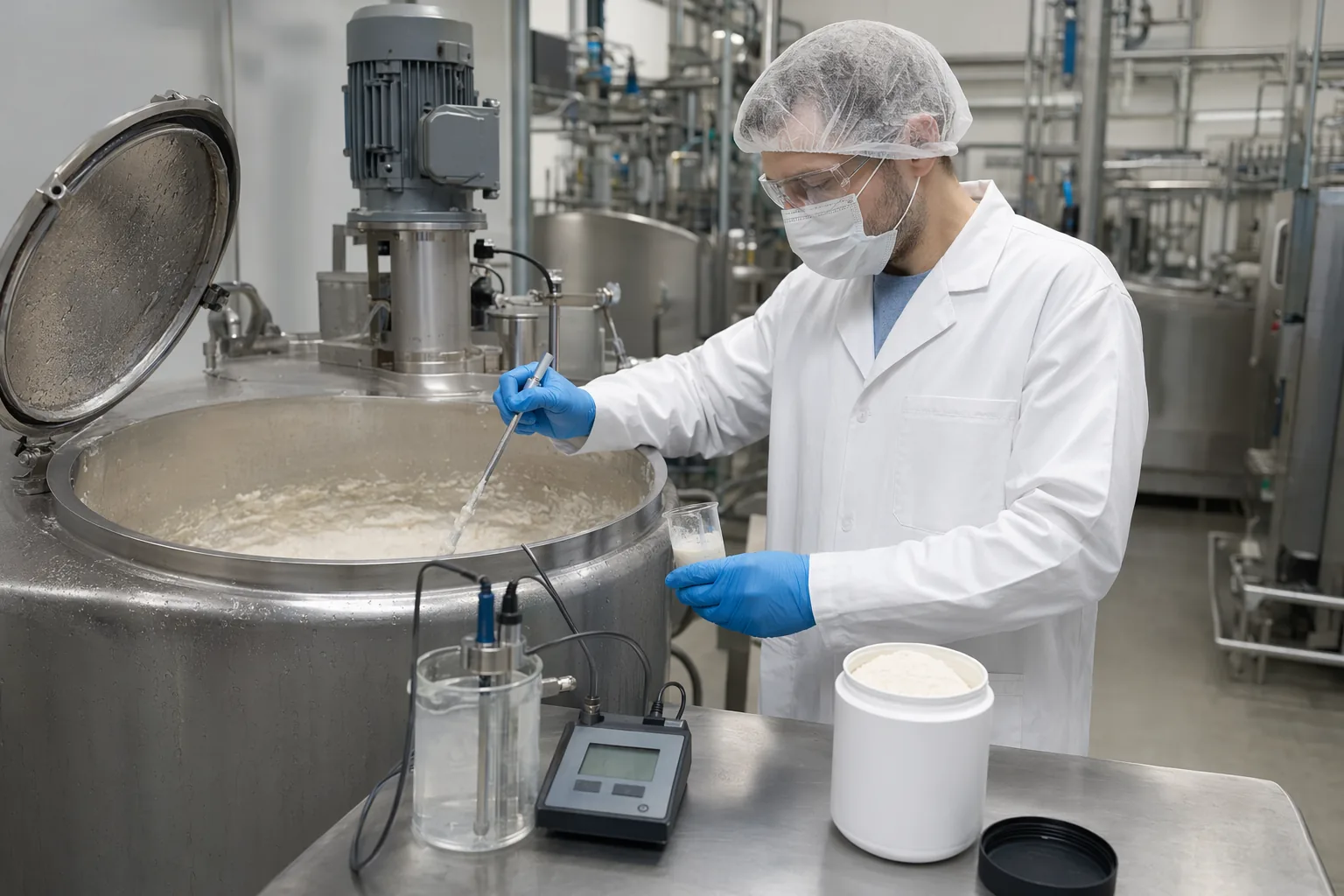
For manufacturers evaluating ficin enzyme for protein hydrolysis, process performance depends on matching enzyme activity, substrate, pH, temperature, residence time, and downstream controls.
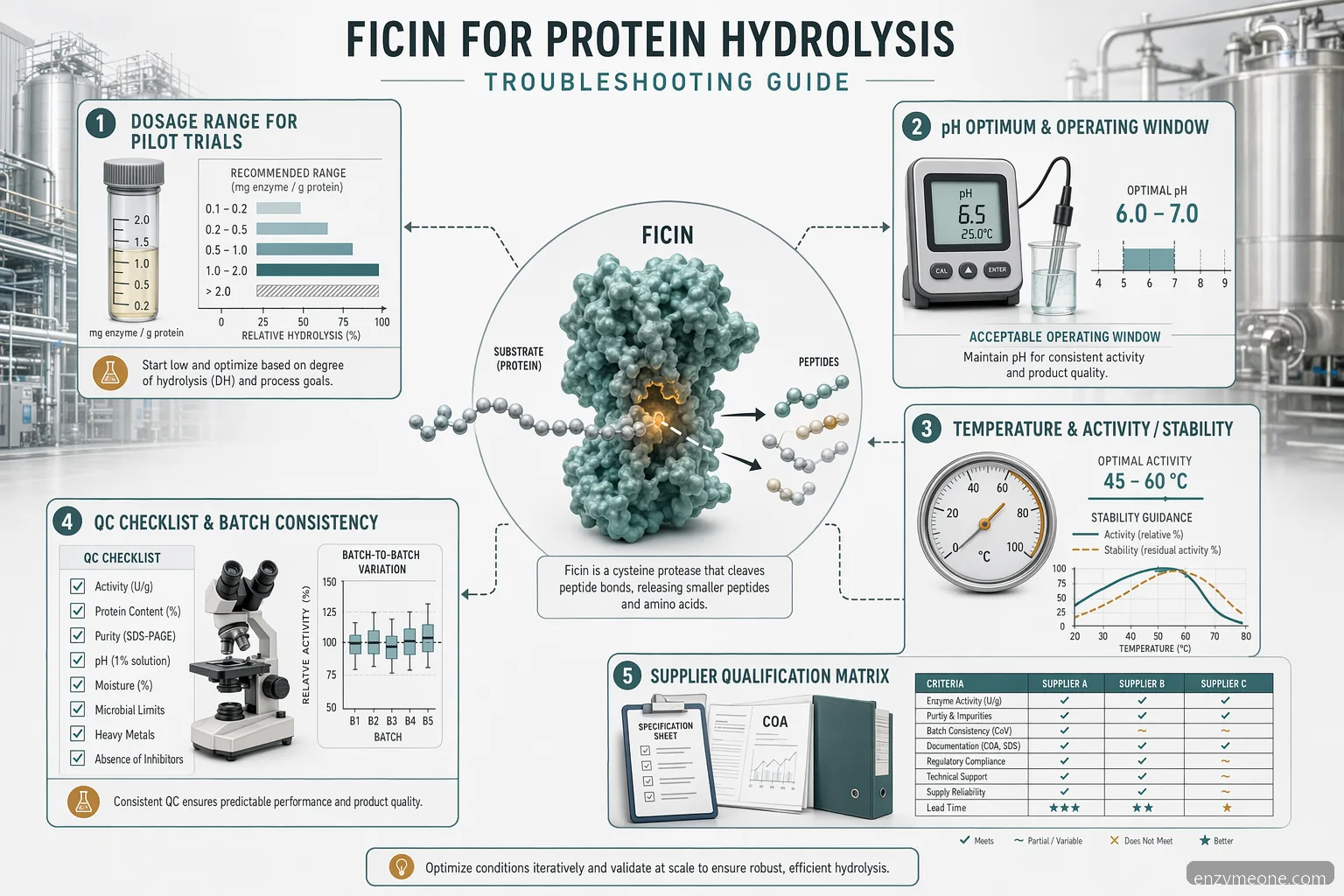
Why Ficin Behaves Differently in Protein Hydrolysis
Ficin is a plant-derived protease commonly associated with fig latex, so buyers may also search for fig enzyme for protein hydrolysis. In industrial systems, it is used to cleave protein substrates into smaller peptides, improve solubility, modify texture, or support functional ingredient production. Performance can vary by substrate, pretreatment, salt level, solids content, and the supplier’s activity assay. A dosage that works on collagen, meat trimmings, plant protein, or gelatin may not transfer directly to dairy, seafood, or mixed protein streams. For troubleshooting, confirm whether the target is rapid viscosity reduction, controlled peptide size, improved digestibility, flavor development, or yield improvement. Each goal may require a different endpoint and enzyme inactivation step. Industrial ficin enzyme protein hydrolysis should therefore be developed through bench screening followed by pilot validation under the same mixing, heating, and holding conditions expected at plant scale.
Define the target hydrolysis endpoint before selecting dosage. • Compare suppliers using enzyme activity and application performance. • Validate on the real substrate, not only model proteins.
Starting Dosage Bands for Pilot Trials
For ficin for protein hydrolysis, dosage should be expressed in activity units per kilogram of protein or substrate whenever the ficin enzyme supplier for protein hydrolysis provides a validated activity method. If only percentage addition is available, use it as a screening reference and convert after obtaining the COA. A practical pilot range is often 0.02% to 0.50% enzyme product by substrate weight, depending on activity concentration, protein accessibility, solids content, time, and required degree of hydrolysis. Low dosages may be suitable for texture modification or mild solubilization, while higher dosages may be needed for tougher connective tissue or high-solids slurries. Avoid assuming that more enzyme always lowers cost-in-use. Over-hydrolysis can increase bitterness, reduce functional structure, create filtration issues, or require extra downstream correction. Build a dosage curve with at least three enzyme levels and a no-enzyme control.
Screen low, medium, and high dosages under identical conditions. • Normalize results to activity units where possible. • Evaluate cost per kilogram of finished hydrolysate, not purchase price alone.
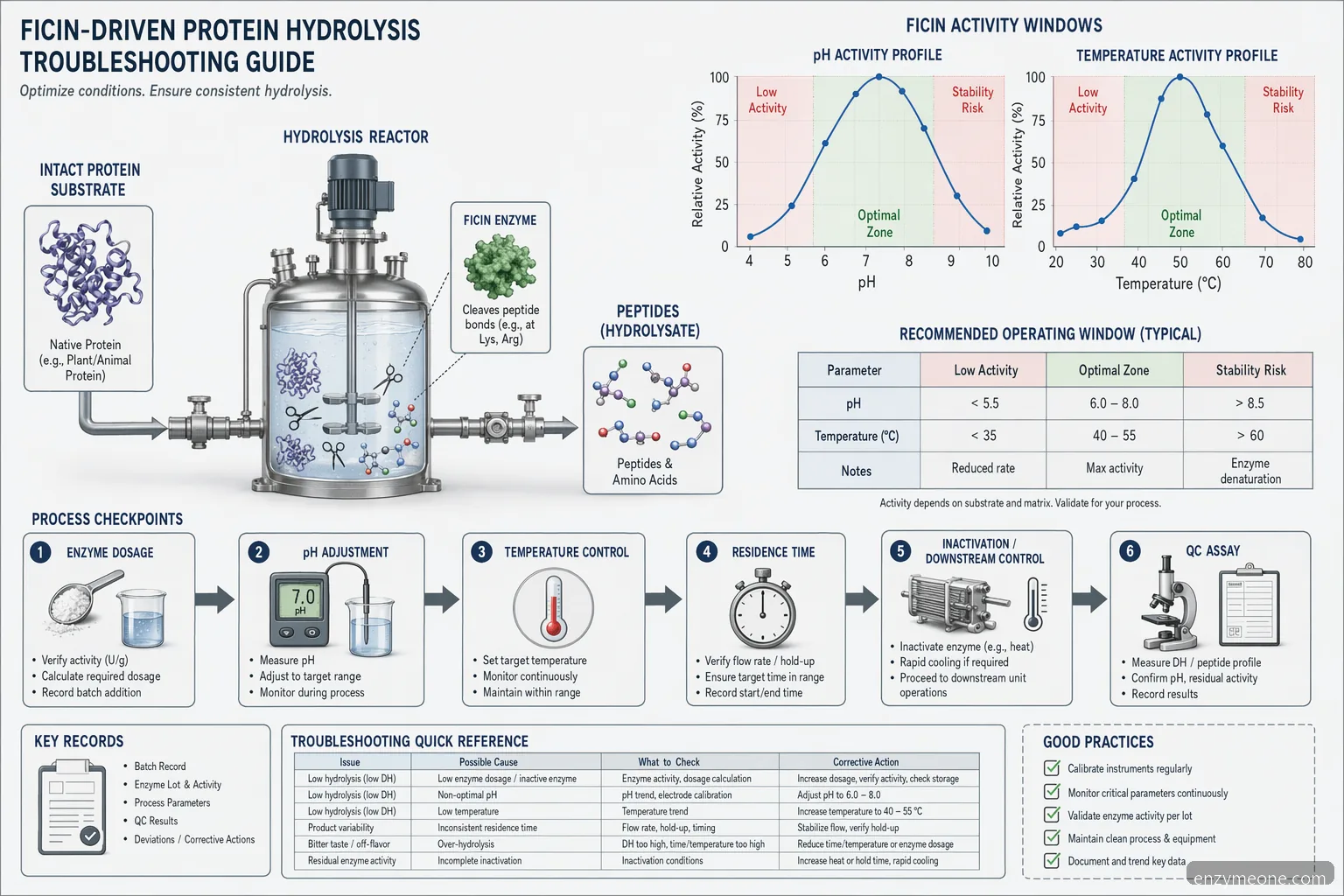
pH and Temperature Troubleshooting
Ficin typically performs best in mildly acidic to near-neutral process windows, but the ideal pH must be confirmed against the supplier’s TDS and the actual substrate. A common screening range is pH 5.0 to 7.5, with narrower optimization once soluble nitrogen and peptide distribution are measured. Temperature screening often starts around 40°C to 60°C. Lower temperatures may protect sensitive flavors or reduce microbial risk when combined with short holds, while higher temperatures may improve reaction rate until enzyme stability declines. If hydrolysis stalls, check pH drift from substrate buffering, acid addition, mineral salts, or released amino groups. If performance drops after scale-up, verify heat-up time, tank gradients, shear, and actual product temperature rather than jacket temperature. For controlled production, define both the active hydrolysis temperature and the thermal inactivation condition used to stop the reaction.
Initial pH screen: commonly pH 5.0 to 7.5. • Initial temperature screen: commonly 40°C to 60°C. • Confirm final settings with the supplier TDS and plant trials. • Document enzyme inactivation to prevent continued hydrolysis.
QC Checks That Prevent Batch-to-Batch Variation
Industrial ficin protein hydrolysis requires analytical controls beyond appearance and yield. Track pH before addition, during holding, and at endpoint. Measure temperature at representative tank locations. Depending on the product, QC may include degree of hydrolysis, soluble nitrogen, free amino nitrogen, peptide molecular-weight distribution, viscosity, turbidity, filtration rate, moisture, ash, microbiological indicators, and sensory notes such as bitterness or sulfur notes. For troubleshooting, retain samples from each time point and compare them with a historical acceptable batch. If a batch is under-hydrolyzed, review enzyme storage, lot activity, dosing accuracy, mixing, residence time, and substrate pretreatment. If a batch is over-hydrolyzed, reduce hold time, dosage, or temperature, and confirm the inactivation step. A practical specification should include both process parameters and finished-product functional results, because the same degree of hydrolysis may behave differently across substrates.
Use time-point sampling during scale-up. • Keep retain samples from accepted and rejected batches. • Link QC results to functional performance, not only chemical values.
How to Qualify a Ficin Supplier
A qualified ficin supplier for protein hydrolysis should provide a current COA for each lot, a TDS with activity definition and recommended use conditions, and an SDS for safe handling. Buyers should ask how activity is measured, whether the product is powder or liquid, recommended storage conditions, carrier composition, allergen and regulatory information relevant to the market, and expected shelf life. Because activity assays can differ, compare suppliers in your own substrate system rather than relying only on label strength. Request pilot quantities from the fig enzyme supplier for protein hydrolysis and run side-by-side trials against your current process target. Supplier evaluation should include lot-to-lot consistency, documentation responsiveness, lead time, packaging suitability, technical support, and cost-in-use. The best choice is not always the lowest unit price; it is the enzyme that delivers the required hydrolysis endpoint reliably at commercial scale.
Request COA, TDS, SDS, and lot traceability. • Confirm activity method and storage requirements. • Run side-by-side pilot trials before commercial approval. • Calculate cost-in-use using actual endpoint performance.
Technical Buying Checklist
Buyer Questions
A practical screening range is often 0.02% to 0.50% enzyme product by substrate weight, but the better basis is activity units per kilogram of protein or substrate. Run a dosage curve with at least three levels and a no-enzyme control. Select the dosage that reaches the required endpoint at the lowest reliable cost-in-use without over-hydrolysis.
Many ficin processes are screened between pH 5.0 and 7.5, then narrowed based on the substrate and supplier TDS. The best pH is the one that delivers the target peptide profile, solubility, flavor, and yield under real plant conditions. Monitor pH drift during the reaction because protein buffering and released amino groups can change the effective operating point.
A common pilot screening window is 40°C to 60°C. Higher temperatures can increase hydrolysis rate, but only until enzyme stability or product quality becomes limiting. Confirm actual product temperature in the tank, not just jacket settings. Once the endpoint is reached, use a validated inactivation step to stop further proteolysis and protect batch consistency.
Compare suppliers by performance in your substrate, not only price or label activity. Request COA, TDS, SDS, activity method, storage conditions, shelf life, and traceability. Run side-by-side pilot trials using equivalent activity dosages when possible. Then calculate cost-in-use based on endpoint time, yield, filtration behavior, quality results, and commercial-scale reliability.
Bitterness or excessive viscosity loss often indicates over-hydrolysis, high dosage, long residence time, elevated temperature, or delayed inactivation. Review time-point samples, endpoint data, and dosing records. A corrective trial may reduce enzyme level, shorten holding time, lower temperature, or tighten the stop step. Sensory and peptide-profile checks can help identify the acceptable operating window.
Ficin for Research & Industry
Need Ficin for your lab or production process?
ISO 9001 certified · Food-grade & research-grade · Ships to 80+ countries
Frequently Asked Questions
What dosage should we use for ficin enzyme for protein hydrolysis?
A practical screening range is often 0.02% to 0.50% enzyme product by substrate weight, but the better basis is activity units per kilogram of protein or substrate. Run a dosage curve with at least three levels and a no-enzyme control. Select the dosage that reaches the required endpoint at the lowest reliable cost-in-use without over-hydrolysis.
What pH is best for industrial ficin enzyme protein hydrolysis?
Many ficin processes are screened between pH 5.0 and 7.5, then narrowed based on the substrate and supplier TDS. The best pH is the one that delivers the target peptide profile, solubility, flavor, and yield under real plant conditions. Monitor pH drift during the reaction because protein buffering and released amino groups can change the effective operating point.
What temperature should we use with ficin for protein hydrolysis?
A common pilot screening window is 40°C to 60°C. Higher temperatures can increase hydrolysis rate, but only until enzyme stability or product quality becomes limiting. Confirm actual product temperature in the tank, not just jacket settings. Once the endpoint is reached, use a validated inactivation step to stop further proteolysis and protect batch consistency.
How do we compare a ficin supplier for protein hydrolysis?
Compare suppliers by performance in your substrate, not only price or label activity. Request COA, TDS, SDS, activity method, storage conditions, shelf life, and traceability. Run side-by-side pilot trials using equivalent activity dosages when possible. Then calculate cost-in-use based on endpoint time, yield, filtration behavior, quality results, and commercial-scale reliability.
Why did our ficin hydrolysis batch become bitter or too thin?
Bitterness or excessive viscosity loss often indicates over-hydrolysis, high dosage, long residence time, elevated temperature, or delayed inactivation. Review time-point samples, endpoint data, and dosing records. A corrective trial may reduce enzyme level, shorten holding time, lower temperature, or tighten the stop step. Sensory and peptide-profile checks can help identify the acceptable operating window.
Related: Ficin Enzyme Uses for Industrial Proteolysis
Turn This Guide Into a Supplier Brief Request ficin COA, TDS, SDS, and a pilot sample for protein hydrolysis validation. See our application page for Ficin Enzyme Uses for Industrial Proteolysis at /applications/ficin-enzyme-uses/ for specs, MOQ, and a free 50 g sample.
Contact Us to Contribute