Fig Enzyme Supplier for Meat Tenderization: Ficin Checklist
Compare ficin specs, process ranges, QC tests, and supplier qualification steps for industrial fig enzyme meat tenderization programs.
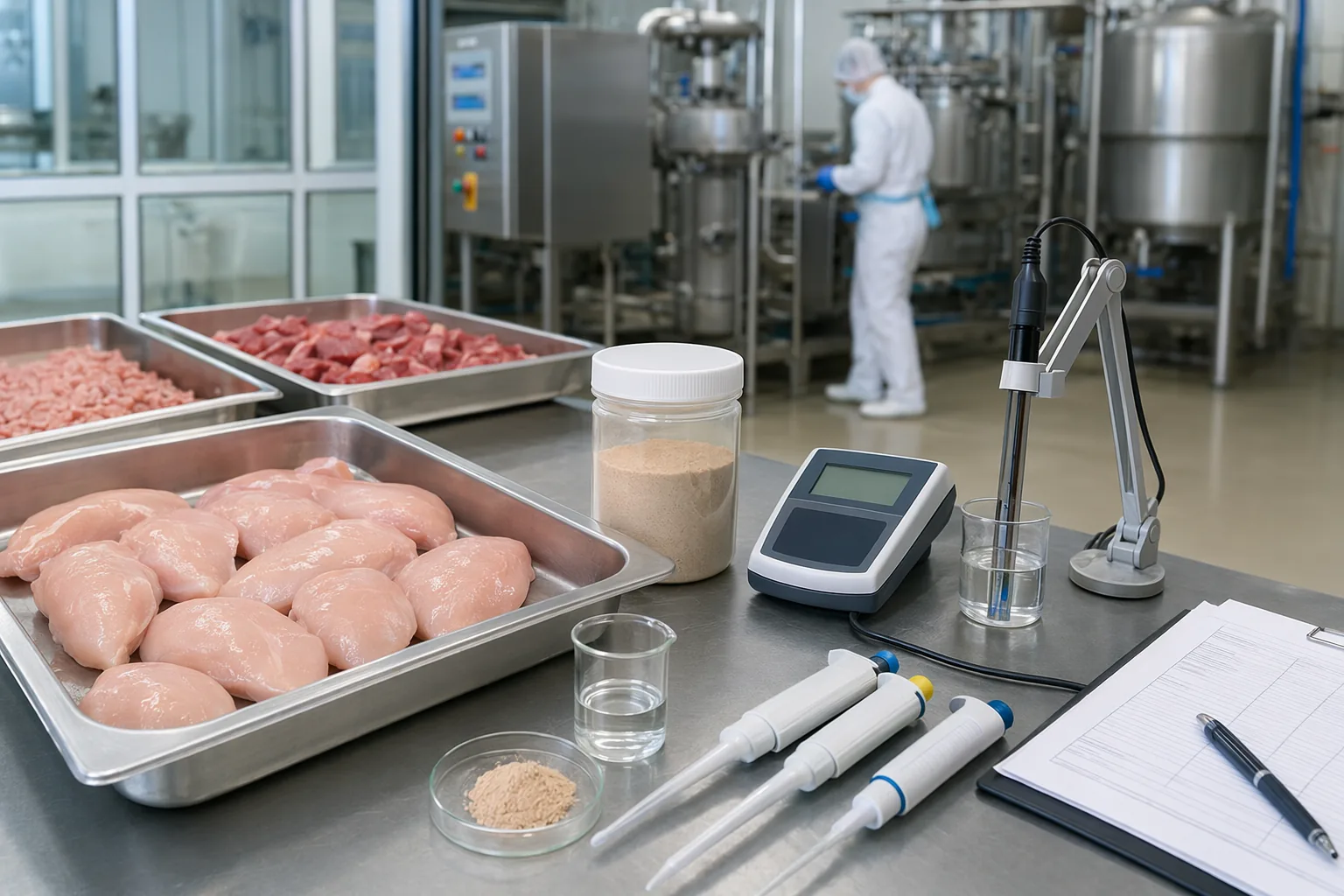
Use this B2B checklist to compare ficin enzyme suppliers, validate process fit, and control cost-in-use for meat tenderization.
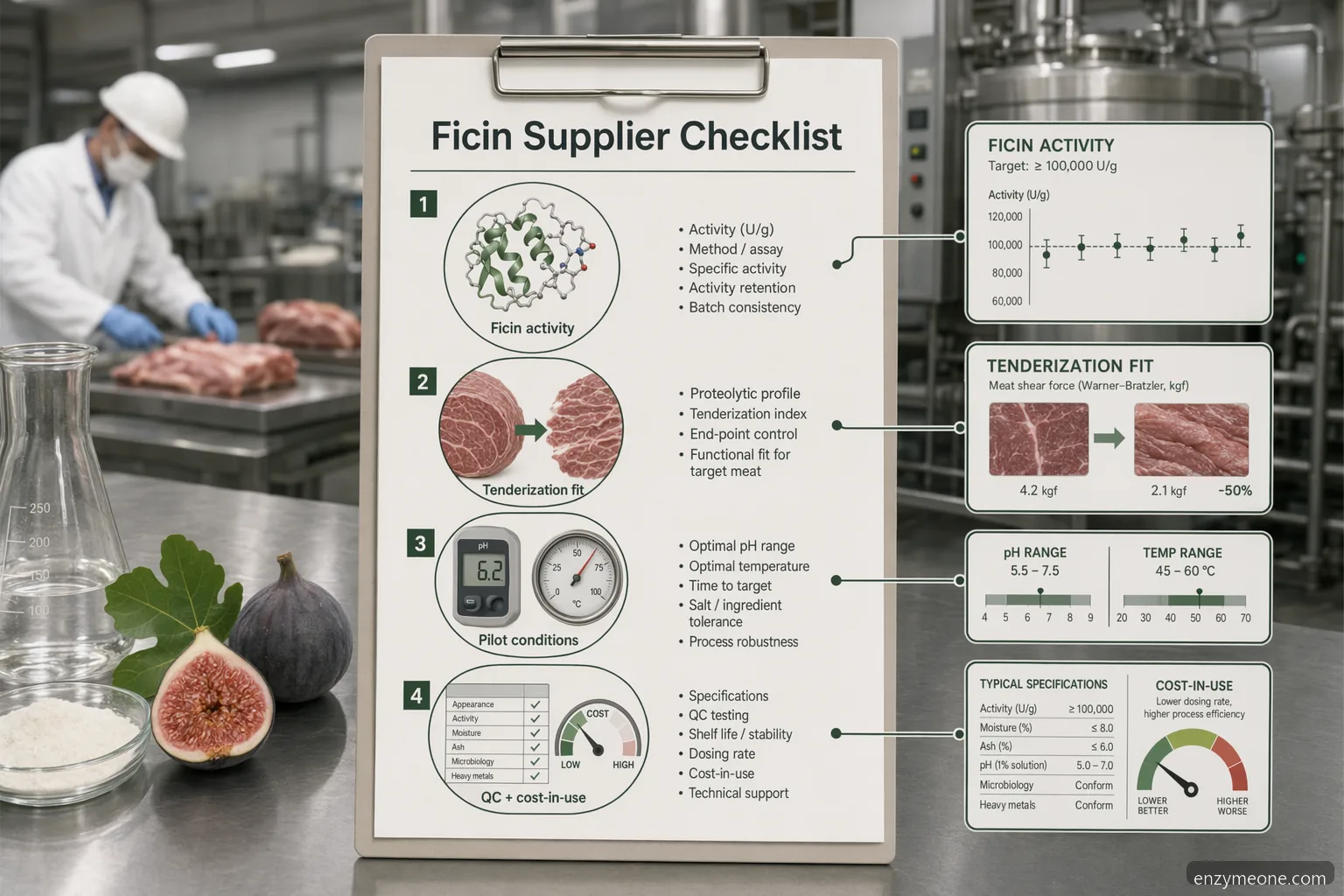
Why Ficin Is Compared for Meat Tenderization
Ficin, commonly described as a fig enzyme, is a plant-derived protease used in industrial ficin enzyme meat tenderization where controlled protein hydrolysis is required. Buyers often compare ficin with other proteases because it can act on myofibrillar and connective tissue proteins under practical food-processing conditions. The commercial decision is not simply whether the enzyme works; it is whether the ficin enzyme supplier for meat tenderization can deliver predictable activity, handling performance, regulatory documentation, and batch consistency. For injected, tumbled, marinated, or surface-treated meats, the enzyme must be matched to dwell time, product temperature, salt level, and thermal kill step. Over-treatment can create mushy texture, while under-treatment may fail to meet tenderness targets. A specification-led approach helps purchasing, R&D, QA, and plant operations compare industrial ficin meat tenderization options using measurable criteria rather than brochure claims.
Best fit: controlled tenderization and protein modification • Common formats: powder or liquid preparations • Primary control points: activity, dosage, time, pH, and temperature
Process Conditions to Confirm in Pilot Trials
For fig enzyme for meat tenderization, typical screening trials often start near pH 5.5-7.0, reflecting many meat systems and marinades. Ficin activity is commonly evaluated at chilled processing temperatures for application practicality, then through warm holding or cooking where enzyme inactivation occurs. A conservative dosage screen may test approximately 0.01-0.20% enzyme preparation on product weight, depending on stated activity, carrier concentration, meat type, and contact time. These ranges are starting points, not universal instructions. Pilot validation should evaluate tenderness, sliceability, purge, cook yield, flavor, color, and texture after the full process. For pumped or tumbled products, distribution uniformity is as important as activity. For dry blends, confirm dispersion in brine or seasoning before scale-up. The strongest suppliers help translate lab activity into line conditions and explain how temperature abuse, extended dwell time, or formulation changes can shift results.
Start with small dosage ladders before plant trials • Record product temperature and contact time • Confirm enzyme inactivation during the validated cook step • Evaluate sensory quality, not only shear force
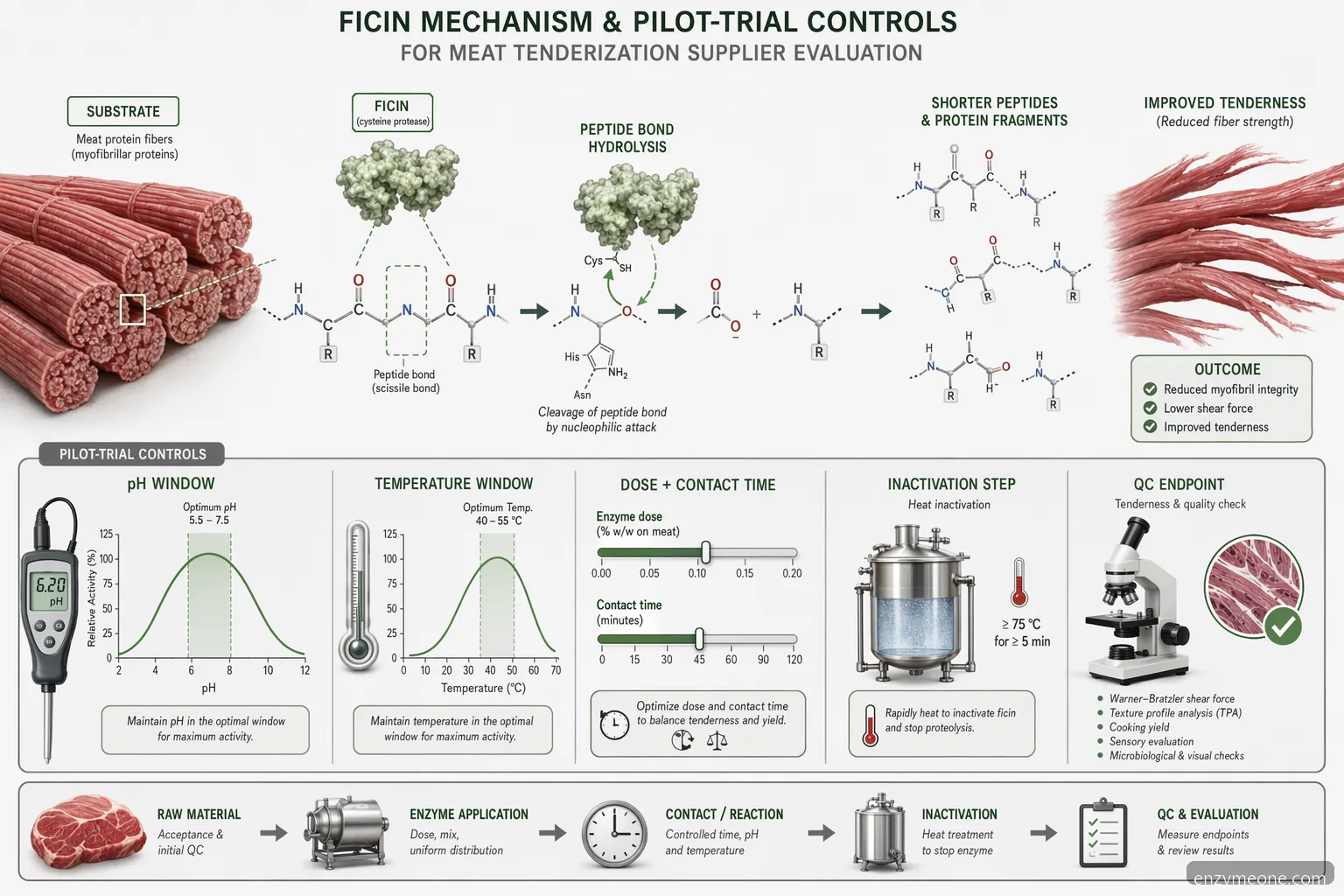
Specification Checklist for Supplier Comparison
When evaluating a ficin supplier for meat tenderization, request a current TDS, COA, and SDS before pricing discussions are finalized. The technical data sheet should define enzyme activity units and test method, recommended pH and temperature range, physical form, solubility, carrier or diluent, storage conditions, shelf life, and suggested application guidance. The certificate of analysis should verify lot-specific activity, microbiological results, moisture or solids where relevant, and agreed quality attributes. The safety data sheet should support safe handling, dust control, PPE selection, and warehouse review. Because activity units are not always interchangeable between suppliers, compare performance in your own substrate and process, not only unit price. A low-priced material with lower effective activity, poor dispersion, or higher variability may increase dosage, rework, or complaints. For industrial fig enzyme meat tenderization, specification clarity is the foundation of cost-in-use control.
Ask whether activity is reported by an internal or recognized assay • Confirm allergen, GMO, and origin statements if required by your program • Require lot traceability and change notification expectations
Quality Control and Supplier Qualification
Supplier qualification should test both the ficin enzyme and the organization behind it. A practical qualification plan includes document review, sample testing, pilot validation, commercial trial approval, and ongoing performance monitoring. QA teams should confirm that each shipment includes a COA tied to the lot number and that retention samples, complaint handling, and deviation procedures are defined. Procurement should evaluate lead time, minimum order quantity, packaging integrity, storage recommendations, and ability to support forecast changes. Technical teams should assess whether the supplier can explain formulation interactions with salt, phosphates, acids, sugars, spices, and thermal processing. If the same supplier also supports fig enzyme supplier for protein hydrolysis or pharmaceutical enzyme applications, ask how manufacturing segregation, documentation depth, and customer-specific specifications are managed. Avoid relying on unsupported claims; use auditable documents, incoming QC checks, and repeated pilot data to qualify an industrial ficin enzyme meat tenderization source.
Review COA consistency across at least three lots when possible • Define incoming QC tests before the first production order • Document approved storage temperature and retest policy • Agree on notification for process, raw material, or site changes
Cost-in-Use: Looking Beyond Price per Kilogram
A strong comparison for a fig enzyme supplier for meat tenderization should convert the offer into cost per treated kilogram of meat at the validated dosage. Include enzyme activity, dilution, yield impact, labor, waste, rework risk, shelf-life impact, and line compatibility. If one ficin enzyme for meat tenderization disperses faster in brine, gives tighter texture control, or requires fewer corrective holds, it may be more economical than a cheaper alternative. Conversely, a highly active preparation may need precise metering to avoid over-tenderization. Ask suppliers to provide sample quantities, recommended trial design, and documentation to support scale-up, but confirm all claims in your own system. Final approval should be based on tenderness targets, eating quality, process robustness, and procurement reliability. The right industrial ficin meat tenderization partner helps R&D optimize performance while giving purchasing a defensible, data-based cost model.
Calculate cost per treated meat unit, not only enzyme price • Include yield, purge, and customer complaint risk • Validate performance at normal and extended dwell times
Technical Buying Checklist
Buyer Questions
Compare suppliers using lot-specific activity, assay method, TDS detail, COA consistency, SDS availability, physical form, solubility, microbiological limits, and technical support. Then run pilot trials in your own meat system. The most useful comparison is cost-in-use at the validated dosage, including texture results, yield, dwell-time tolerance, and operational fit, not simply price per kilogram.
Dosage depends on enzyme activity, meat type, contact time, temperature, pH, salt level, and desired texture. Many industrial screening programs start with a ladder around 0.01-0.20% enzyme preparation on product weight, then narrow the range through sensory and process testing. Always validate against your product, because over-treatment can create excessive softening or poor sliceability.
A qualified ficin supplier should provide a technical data sheet, certificate of analysis, and safety data sheet for review. Depending on your purchasing and QA program, you may also request origin information, allergen statement, GMO statement, microbiological specifications, storage guidance, shelf-life data, lot traceability, and change notification commitments. Documentation should match the exact grade and lot being supplied.
No. Ficin is a protease used in several protein hydrolysis and processing applications, but requirements differ by market and end use. A fig enzyme supplier for protein hydrolysis may not automatically meet the handling, documentation, sensory, or regulatory expectations of a meat plant. For meat tenderization, validate performance in the finished process and qualify the supplier for your specific food application.
Ficin for Research & Industry
Need Ficin for your lab or production process?
ISO 9001 certified · Food-grade & research-grade · Ships to 80+ countries
Frequently Asked Questions
How should I compare ficin enzyme suppliers for meat tenderization?
Compare suppliers using lot-specific activity, assay method, TDS detail, COA consistency, SDS availability, physical form, solubility, microbiological limits, and technical support. Then run pilot trials in your own meat system. The most useful comparison is cost-in-use at the validated dosage, including texture results, yield, dwell-time tolerance, and operational fit, not simply price per kilogram.
What dosage of fig enzyme is used for meat tenderization?
Dosage depends on enzyme activity, meat type, contact time, temperature, pH, salt level, and desired texture. Many industrial screening programs start with a ladder around 0.01-0.20% enzyme preparation on product weight, then narrow the range through sensory and process testing. Always validate against your product, because over-treatment can create excessive softening or poor sliceability.
What documents should a ficin supplier provide?
A qualified ficin supplier should provide a technical data sheet, certificate of analysis, and safety data sheet for review. Depending on your purchasing and QA program, you may also request origin information, allergen statement, GMO statement, microbiological specifications, storage guidance, shelf-life data, lot traceability, and change notification commitments. Documentation should match the exact grade and lot being supplied.
Is ficin only used for meat tenderization?
No. Ficin is a protease used in several protein hydrolysis and processing applications, but requirements differ by market and end use. A fig enzyme supplier for protein hydrolysis may not automatically meet the handling, documentation, sensory, or regulatory expectations of a meat plant. For meat tenderization, validate performance in the finished process and qualify the supplier for your specific food application.
Related: Ficin Enzyme Uses for Industrial Proteolysis
Turn This Guide Into a Supplier Brief Request a ficin sample, TDS, COA, SDS, and pilot-trial support from EnzymeOne. See our application page for Ficin Enzyme Uses for Industrial Proteolysis at /applications/ficin-enzyme-uses/ for specs, MOQ, and a free 50 g sample.
Contact Us to Contribute